Letters, p.1
Letters, page 1


Also by Oliver Sacks
Migraine
Awakenings
A Leg to Stand On
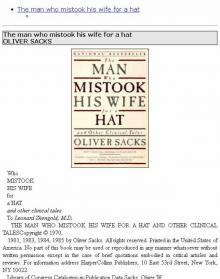
The Man Who Mistook His Wife for a Hat
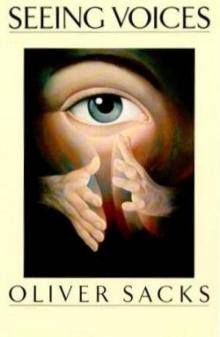
Seeing Voices
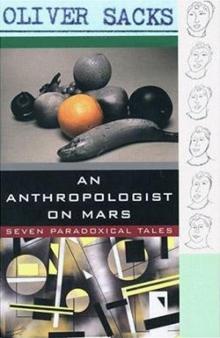
An Anthropologist on Mars
The Island of the Colorblind
Uncle Tungsten
Oaxaca Journal
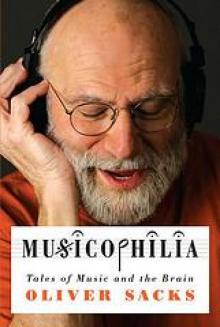
Musicophilia
The Mind’s Eye
Hallucinations
On the Move
Gratitude
The River of Consciousness
Everything in Its Place
This Is a Borzoi Book Published by Alfred A. Knopf and Alfred A. Knopf Canada
Copyright © 2024 by The Oliver Sacks Foundation
Preface and Editor’s Note copyright © 2024 by Kate Edgar
Penguin Random House values and supports copyright. Copyright fuels creativity, encourages diverse voices, promotes free speech, and creates a vibrant culture. Thank you for buying an authorized edition of this book and for complying with copyright laws by not reproducing, scanning, or distributing any part of it in any form without permission. You are supporting writers and allowing Penguin Random House to continue to publish books for every reader. Please note that no part of this book may be used or reproduced in any manner for the purpose of training artificial intelligence technologies or systems.
All rights reserved. Published in the United States by Alfred A. Knopf, a division of Penguin Random House LLC, New York, and in Canada by Alfred A. Knopf Canada, a division of Penguin Random House Ltd., Toronto, Penguin Random House Companies.
www.aaknopf.com
Knopf, Borzoi Books, and the colophon are registered trademarks of Penguin Random House LLC.
Library of Congress Cataloging-in-Publication Data
Names: Sacks, Oliver, 1933–2015, author. | Edgar, Kate (Editor), editor.
Title: Letters / Oliver Sacks ; edited by Kate Edgar.
Description: New York : Alfred A. Knopf, 2024. | Includes bibliographical references and index.
Identifiers: LCCN 2023052530 (print) | LCCN 2023052531 (ebook) | ISBN 9780451492913 (hardcover) | ISBN 9780451492920 (ebook)
Subjects: LCSH: Sacks, Oliver, 1933–2015—Correspondence. | Sacks, Oliver, 1933–2015—Friends and associates. | Neurologists—England—Biography. | LCGFT: Personal correspondence.
Classification: LCC RC339.52.S23 A4 2024 (print) | LCC RC339.52.S23 (ebook) | DDC 616.80092 [B]—dc23/eng/20240222
LC record available at https://lccn.loc.gov/2023052530
LC ebook record available at https://lccn.loc.gov/2023052531
Library and Archives Canada Cataloguing in Publication
Title: Letters / Oliver Sacks.
Names: Sacks, Oliver, 1933–2015, author.
Identifiers: Canadiana (print) 20240322576 | Canadiana (ebook) 20240322592 | ISBN 9780345811417 (hardcover) | ISBN 9780345811431 (EPUB)
Subjects: LCSH: Sacks, Oliver, 1933–2015—Correspondence. | LCSH: Sacks, Oliver, 1933–2015—Friends and associates. | LCSH: Neurologists—England—Biography. | LCGFT: Personal correspondence.
Classification: LCC RC339.52.s23 A3 2024 | DDC 616.80092—dc23
Ebook ISBN 9780451492920
Cover photograph © Rosalie Winard
Cover design by Chip Kidd
oliversacks.com
ep_prh_7.0a_148686020_c0_r0
Contents
Dedication
Preface
Editor’s Note
1 A New World | 1960–1962
2 Los Angeles | 1962–1965
3 Jenö | 1965
4 Analysis | 1966–1968
5 Coming to Life | 1969–1971
6 In the Company of Writers | 1971–1973
7 Astronomer of the Inward | 1974–1975
8 Atavisms | 1975–1977
9 Coming to Terms | 1978–1979
10 Clinical Tales | 1980–1984
11 Going Deeper | 1985–1988
12 Adaptations | 1989–1995
13 Syzygy | 1995–2003
14 Snapshots | 2003–2006
15 Visions | 2006–2015
16 Gratitude | 2015
Illustrations
Acknowledgments
Selected Bibliography
List of Correspondents
Index
Illustration Credits
A Note About the Author
A Note About the Editor
_148686020_
In memory of Dan Frank
Preface
Kate Edgar
Oliver Sacks adored letters. In London, where he grew up in the 1930s and 1940s, letters and postcards were the way people kept in touch. Relatively few households yet had access to a telephone, but there were two mail deliveries a day, so one could, if need be, reply by return post the same day.
By the time he was six years old, Oliver was away at boarding school, and I cannot help imagining that a letter from home must have been especially prized. Even as an adult, he loved collecting the post each day to see what it would bring him.
He always felt that one must reply to a letter—instantly, if possible. (This seemed to be a combination of good manners and his irrepressible urge to communicate.) He was even known to compose a few lines to send to the electric company along with his monthly check. He saved envelopes, especially those from important people or from exotic locations, and interesting postage stamps (we, his office staff, would later do the same, putting them aside for a particular patient or two who collected them).
Throughout his life, Oliver kept most of his incoming correspondence, and took pains to preserve his own replies—with carbon sets, rough or retyped drafts, or, later, photocopies. This, of course, was not always possible in the early 1960s, when this book begins. Many of the letters in the first chapters are reproduced from the lightweight, folding airmail missives he sent home to London after arriving in North America. It would have been difficult to copy these at the time, apart from photographing them, but fortunately, his parents saved the letters, and they were later returned to Oliver.
His sheer output of letters was prodigious. The correspondence files in his archive include something like two hundred thousand pages—some seventy bankers boxes full.
* * *
—
Oliver’s literary style, while vivid and lyrical, was rarely concise, and it was complex in both structure and content. In person, he often spoke in paragraphs with long asides, but finally circling back to the topic at hand; when he was working on an essay or a book, it was much the same. He had difficulty, however, editing his own work. Thus, when one editor or another asked him to clarify something or boil it down, he would simply crank a new piece of paper into his typewriter and start over. Voilà, a new draft. Eventually, the editor would have a pile of drafts, to say nothing of a sheaf of follow-up letters with new footnotes and addenda. It was difficult to choose the best among these, since most versions contained wonderful passages, but each headed in a different direction.
When I began working with him as a young editor, circa 1983, it seemed clear to me that the only solution was to cut and paste among the many drafts (in those pre-computer days, we did this the old-fashioned way, with scissors and tape), stitching together his various trains of thought. And so—informed by his wonderful stories and his philosophical ruminations, or often simply repeating things he had just said to me—I tried to do so. In time we worked out a dialogic process of editing.
This was new for me. I was used to getting a more or less complete manuscript from an author, reading it through a couple of times, and then making and revising my comments before returning them for the author’s consideration. Oliver, on the other hand, wanted me actually sitting by his side as he tore each finished page out of the typewriter: “Here! What do you think?” I began referring to this as “combat editing.”
I would arrive home after a day with Oliver, exhausted from the nonstop effort of trying to keep up with his restless intellect for eight hours. But it was also exhilarating work, and when he phoned me an hour or two later with new thoughts, I was ready to dive back in. What started for me as a freelance job, occupying a day or two a week, soon became a full-time vocation—and then some.
* * *
—
In those days, Oliver told me a great deal about his youth and early days as a doctor and a writer. He had published two books already, both based on the patients he was seeing as a neurologist. Migraine (1970) and Awakenings (1973) already showed his patient-centered approach to his work, his curiosity, and his deep erudition. But though Awakenings had been a literary success, he had received little or no recognition from his medical peers—quite the opposite. Partly perhaps because of this, he was struggling to finish A Leg to Stand On, a book he had worked on for almost a decade. He could hardly have imagined at that point that he would one day become a hero to aspiring young doctors around the world or ignite an entire genre of what he called “clinical tales.”
The letters in this volume are full of contradictions; they are ferocious, tender, observant. They betray a fair degree of self-absorption—the kind many of us might evince in adolescence—but more usually show a concern and generosity, especially for people at the margins of society: young people, old people, incarcerated
By 1970,[*2] he is hitting his stride, and he writes: “I think that I am a good (and, very rarely, at magic moments, a great) teacher: not because I communicate facts, but because I somehow convey a sort of passion for the patient and the subject, and a feeling of the texture of patients, the way their symptoms dovetail into their total being, and how this, in turn, dovetails into their total environment: in short, a sort of wonder and delight at the way everything fits (and it does all fit, so beautifully, like a wonderful jigsaw puzzle).”
One can see that, from the beginning, he had high aspirations for himself as a writer, perhaps even before he found his true calling as a physician. One can hear his thoughts evolving over a span of decades, returning to the same topics again and again, searching for a new understanding that would fully mature only with the development of modern neuroscience in the 1980s. Sometimes he uses letters to try out new ideas or modes of expression; at times his letters seem more akin to journal entries or attempts at semi-fictionalized narrative. They occasionally become exercises in the analysis of his own psyche, especially as he begins his journey into psychoanalysis in the mid-1960s.
One can feel the evolution of his prose as it becomes more assured, more focused, partly in response to his vast correspondence with thousands of people, from Nobel laureates to schoolchildren. By the middle of the 1980s, after the publication of The Man Who Mistook His Wife for a Hat, his correspondence broadened to include legions of fans, and many of those people offered him their own stories. Oliver loved writing back and forth with them, and their letters became an extension of his medical practice. Much as Darwin corresponded with ornithologists and pigeon fanciers around the world to expand his understanding of natural selection, so Oliver wrote to one and all to gain insights into human experience and individuality.
Oliver insisted—to himself and to others—that his own observations, however seemingly exotic, guide his practice. On this point, he was adamant. (He often compared himself to a natural historian, like Humboldt, Bates, or Darwin, those nineteenth-century explorers he loved to read as a boy, and he considered observation and description to be his métier.) Long before most in his profession, he was describing the effects of music and art as therapy in the patients he spent so many hours with. He was beginning to develop a new view of conditions very few had even heard of, like Tourette’s syndrome and migraine aura and prosopagnosia. He revisited long-misunderstood conditions like autism and color “blindness,” introducing them to his readers with his usual sense of wonder and profound empathy. Indeed, he broke with his medical colleagues by casting such conditions not as pathologies but as, simply, different modes of being.
* * *
—
One thing that is abundantly clear from his letters (and Oliver himself remarks on this) is that he had a seriously prolonged adolescence. One can imagine many possible reasons. As a child, he had been exiled from his family and friends during the war, sent to a remote boarding school, where he was beaten and starved but afraid to complain. As a gay teenager and adult, he was forced to hide his sexual orientation in a homophobic culture. And as a brilliant but unconventional man, he seemed to attract envy and rivalry from nearly all his bosses, as well as outright rejection or silence from his peers. His moods oscillated between rushes of creativity and periods of withdrawal.
Oliver was not unaware of this. He had spent an awful lot of his life, he told me, in immobilizing depression, which seemed to alternate with manic creativity. Was he bipolar and somehow began to grow out of it as he approached the age of forty? He sometimes wondered if this was so, or whether perhaps he was schizophrenic, like his brother Michael—though his psychiatrist of nearly fifty years thought he was neither. Then there were the amphetamines, opiates, and hallucinogens that he used to excess throughout the 1960s. His letters from these early days are sometimes grandiose, melodramatic, perhaps written while he was high on speed.
He began to emerge from his own self-doubts in the early 1970s, especially with the sudden death of his mother and the publication of Awakenings on his fortieth birthday. In his correspondence, we see him forced to confront and embrace his own adulthood; his mood swings, while still evident, become more moderate. His letters become more concise, more assured. (His gradual quitting of amphetamines must have helped, as did years of analysis, greater success in the literary world, and more recognition from his medical colleagues.)
Oliver sometimes complained, as time went on and he became a popular figure, about the sheer volume of correspondence he received (and thus felt compelled to answer). It is true that writing letters sometimes seemed a distraction from whatever “bigger” writing projects he was working on, but it was also crucial, his connection to the world. Often a serendipitous letter, totally unexpected, would launch him on a whole new essay or even a book. At other times, he might remember and dig up a letter from years earlier, as a topic he had been subconsciously cultivating burst into consciousness. Letters remained, as always, a lifeline, and a constant source of inspiration. Even into old age, Oliver loved to sit down with a handful of incoming mail, a pile of notepaper, and his fountain pen, poised to reply.
Skip Notes
*1 Letter to his parents, July 6, 1961.
*2 Letter to his parents, May 6, 1970.
Editor’s Note
OS could type amazingly fast, using his two index fingers in a machine-gun staccato. His typos were many, and he had a rather Germanic sense of capitalizing certain nouns (usually conceptual ones like Action or Will) when he wanted to emphasize them. And he used many elements of punctuation interchangeably: dashes, commas, ellipses, colons, and quotation marks (to say nothing of underlinings, double underlinings, fountain pen flourishes, and ALL CAPS) are all sprinkled liberally and inconsistently throughout his work.
For this book, his various emphatic forms are all rendered as italics. Obvious typos or missing words are, for the most part, silently corrected. I have freely repunctuated his letters for legibility but kept some of his random punctuation and a few misspellings to convey a slight flavor of his style and usage. OS often confused the spelling of people’s names, even those of close friends. In most cases, I have corrected these; those I have left are explained in context. His spelling also evolved, with time, from U.K. usage to U.S. custom.
Quite a few of the letters I pared down for this volume began as epistles running to a dozen or more typed pages. (One, at least, clocked in at forty pages.) All editorial excisions, large and small, are indicated by ellipses within square brackets (unbracketed ellipses are in the originals).
I have often left out certain stock phrases or thoughts that OS included in his letters. He frequently, for instance, began a letter by apologizing for his delayed reply. (In some cases this “delay” was a matter of days or weeks; occasionally, several years. But he would pick up these conversations with an immediacy that defied whatever amount of time had passed.) Similarly, he often closed a letter with apologies for his handwriting or the length of his reply; I have left a few of these as examples.
He was very fond of quoting, sometimes in extenso, all manner of people: among his favorites were Freud, Darwin, Goethe, Dickens, Lewis Carroll, and William James. I have retained some of these quotations but omitted many more. Most of them are likely recalled from memory and are often inexact. Occasionally I have corrected minor variances silently; at other times I have footnoted the actual quotation he was thinking of.