Ash, p.1
Ash, page 1
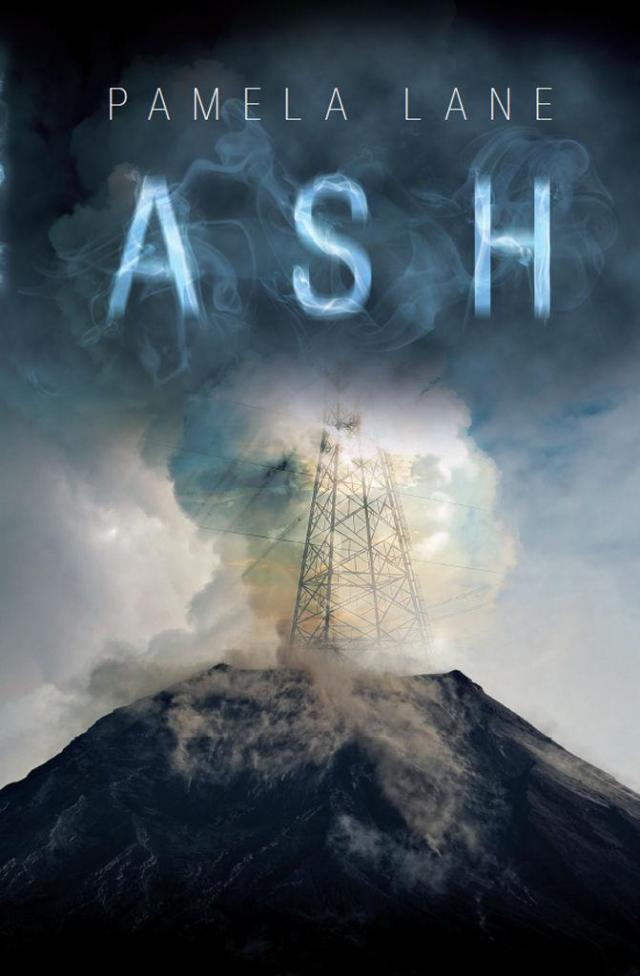


PAMELA LANE
ASH
Copyright ©2017 Pamela Lane
All rights reserved.
ISBN: 1546892354
ISBN-13: 9781546892359
For Alexander and Emily
CONTENTS
FOREWORD
Chapter 1: London, Spring
Chapter 2: Greenland
Chapter 3: Millcott B Power Station
Chapter 4: London
Chapter 5: London
Chapter 6: London
Chapter 7: London, Summer
Chapter 8: Iceland
Chapter 9: London
Chapter 10: London
Chapter 11
Chapter 12: Millcott B
Chapter 13: London
Chapter 14: London
Chapter 15
Chapter 16: London
Chapter 17: London
Chapter 18: Calais
Chapter 19: London, Autumn
Chapter 20
Chapter 21: Kent
Chapter 22: London
Chapter 23: East Millcott, Winter
Chapter 24: New York
Chapter 25: East Millcott
Chapter 26: London
Chapter 27: London
Chapter 28: On The Road
Chapter 29: Millcott B
Chapter 30
Chapter 31
Chapter 32: Bristol
Chapter 33: Millcott B, The Polar Vortex
Chapter 34
Chapter 35
Chapter 36: London
Chapter 37: Millcott B
Chapter 38: London
Chapter 39
Chapter 40: Millcott B
Chapter 41
Chapter 42
Chapter 43: Millcott B
Chapter 44: London
AFTERWORD
FOREWORD
All characters and events portrayed in Ash are entirely fictional. Details of geographical locations have sometimes been changed to meet the needs of the story.
Concern was growing about Katla.
The volcano in Iceland had been sleeping for the past ninety-six years. Now reports were coming in of tremors from around the area. On seismographs, zig-zag patterns burst onto rolls of paper then flat-lined again. Reports began to come in of unusual activity near the mountain. Cracks appeared in the ice without warning and foul-smelling gases hung menacingly in the air. Shallow lakes of crystal water disappeared overnight. Sometimes the ice groaned with a sound older than any living thing. Birds, sensing the danger, flapped their retreat from the mountain, while the sparse mammal population pricked its ears and strained, they, too, were ready. Waiting to flee.
The people heard and saw the signs but had heard them and seen them all before. It would be alright, they thought; Katla had been quiet for a long time. Quiet, that is, apart from two occasions, the first in 1955 and then again in 1999, when the volcano stirred slightly, snorted, then turned over and settled back into its dormant phase. Now, it seemed, it had been having a lie-in, which made Katla’s observers nervous. The normal interval between eruptions was around forty to eighty years. The longer the quiet phase went on, the more it led to speculation that when the eruption did take place it would be on a massive scale. The present period of dormancy was the longest in recorded history. It didn’t take a genius to work out that an eruption could be imminent and that the pent-up energy in the volcano could be huge.
Deep under several hundred metres of ice, pressure was building as magma seeped from beneath the earth’s crust. A red-hot river, it heaved and flowed under the giant ten kilometre caldera, pushing and contorting against its restricting walk until, at last, it would find a way to escape. Iceland was where the mid-Atlantic fault-line rose to the surface. Where churning forces cracked open old land and then forged new. Land which came bursting from the waves without warning. It was a place where islands could be made in a day – or disappear just as quickly. A place where planet-sized detonations could throw billions of tons of ash into the atmosphere, clouding out precious sunlight for years.
And where the modern world could be tipped into chaos without warning or ceremony.
1
London, Spring
It had been another cold winter, like all the winters since 2010, only this one had dragged on for much longer. It was now spring, but you wouldn’t know it. Emma Stamford unhooked her parka from the stand in the hall and stepped out into street, pulling up her hood as she did so. The downside of working from home was the isolation, so had given herself an hour off to socialize. She shivered slightly in the breeze.
The snow had arrived two weeks before Christmas with perfect timing. It was fun while white pavements looked like the archetypal Dickensian backdrop to the holiday season. Fur-trimmed shoppers hurried by the strings of tasteful white lights and nostalgic window displays of the big stores, loving the atmosphere. Then dull reality set in with the arrival of New Year. January had filled the London streets with a mixture of slush and biting north-easterlies which steadfastly refused to shift direction as one week dragged into the next. It was April before the last of the snow disappeared. The winds persisted, thin and niggling, defying the turning of the year and getting everyone down. Emma knew this much; something wasn’t right with the weather.
“I’ll be about ten minutes,” she said into her phone as she hurried along.
Emma Stamford was fifty-four years old, her thick, dark brown hair was fashionably cut, its refusal to turn grey making her look younger than that by at least ten years. A journalist by profession, she now ran a production company making training and promotional videos for businesses.
She’d set her company up in the late 90’s with the help of her husband, Bill. Her late husband. She could never get used to saying that. It made it seem so final, so complete that he’d died; too accepting somehow. It was two years since he’d passed away. She still couldn’t understand it. He’d always seemed so indestructible. Then, the summer before last, he’d started to complain that he never felt quite well. By the time he got around to going to the doctor he was untreatable. In a few terrible weeks he had faded away before her eyes.
Then he was gone.
They had been building up their production company gradually, hoping that one day, Bill, or maybe both of them could go full time if they managed to get enough work. Emma had previously worked for a lifestyle magazine called Home and Fashion, a job she liked, whereas Bill had been a sales manager for a national chain of retailers, a role which had never suited him and which he couldn’t wait to leave.
All that changed after Bill died. Their project, which had started out as their ticket to a more rewarding life, had now become Emma’s sole source of income after Home and Fashion closed down. Times were hard.
Emma walked into the Gallery Café on the high street.
“A large Americano, please, with hot milk,” she said to the girl behind the counter who nodded and smiled.
“Hello there!” The café owner had spotted Emma out of the corner of his eye.
“Oh hello, Matt. Busy today?”
“I’ll say. Everyone’s come in out of the cold!”
She then sat down with a group who were clearly expecting her. She struggled out of her coat as it was warm in the crowded café. She looked at the faces huddled around the table. Good friends. Carol Ashton, whom she’d known from the magazine, was immaculately groomed as always, her blond hair swept back from her face, her lipstick bright and neatly applied. She was chatting amicably. Andy Balham, a neighbour, sat in the middle. Then there was James and Kate, a couple in their thirties who she’d interviewed one day for the magazine as they were part of the local theatre group. James had ambitions to become an actor and did agency work as an extra. Kate wrote plays between shifts at a music store. Emma loved their boho lifestyle and art college clothes but knew if she tried to copy the look she’d be mistaken for a bag-lady. Through Emma, they did regular promotions of their latest productions in Home and Fashion, eventually becoming friends.
She wondered where Jack Ellis was.
The last time she had spoken to him he’d been very attentive – said they should go out for dinner sometime. Her heart fluttered at the memory of his smile.
“Oh he’ll be here soon, I expect,” said Carol.
Emma sipped her coffee.
“I’ve got a new project on,” she said to anyone who was listening.
“Go on,” said Andy. “Where are you off to this time?”
“The East Midlands, for the first phase. Making a short for Enlecco.” Everyone groaned.
Enlecco, or the English Electricity Company as it had started out, had now become so big it had a virtual monopoly over the utilities market. It also had a reputation for big profits and poor customer service. Independent utility companies had, one by one, been sucked into the Enlecco conglomerate, first the small fry and then its larger rivals, making competition virtually non-existent. Enlecco had spread out into the financial services industry too, and owned goodness-knows-what at board level without advertising the fact by changing well-known names.
Even so, the orange and black Enlecco logo was everywhere. Its on-line business dominated cyber-trading too. As a major employer it had to be grudgingly accepted by people who didn’t agree with its ubiquity or lack of principle. Emma, like everyone else, was uncomfortable with Enlecco but had to live in the life she was in.
“It’s a staff induction film telling their employees how clean and green they now are. I’m driving up there tomorrow,” she said.
“Do you need any actors, Emm a?” said Kate, hopefully, nudging James.
“Sadly, no, Kate. They want their own staff to feature. I’ll be filming an old power station tomorrow, some interviews, then lots of pictures of green valleys and trees for the voice over.”
“I hope they pay well,” said James.
“Well actually, they do,” said Emma. “For this kind of thing. Which is just as well at the moment as my electricity and gas bills have just come in.”
Everyone laughed. No-one had laughed when the bills had arrived though. Prices had gone up by fifteen per cent again this year. And after the cold winter they were all struggling to pay.
“How long will you be away filming?” asked Carol.
“Just a couple of days, I expect. Should be quite straightforward.”
“What a pity you’ll miss our little get-together tomorrow evening,” said Carol. “We’re all meeting up at The George for drinks.”
“Who will be there?” asked Emma.
“All the usual faces. We were hoping you could come.”
“Any particular occasion – I’ve not forgotten someone’s birthday have I?”
“No. It’s Jack’s leaving do.”
“Leaving do! What do you mean?” asked Emma. Her heart skipped a beat. She had the feeling that she was the last to know something.
“He’s been moved by his company – I think they’ve been taken over or something. So head office will no longer be in London.”
Emma nodded and tried not to show that she was upset. Her friendship group had become very important to her since she lost Bill. Any sign of it breaking apart made her feel nervous and insecure. Jack was the centre of this group for her. She had to admit he was a bit special.
“Where will he be going – do you know?” said Emma to Carol.
“Amsterdam, I think he said.”
That hit harder than she thought it would.
“Amsterdam! When? All of this is a bit of a surprise.” She almost said shock. “When will he be going?”
“At the end of the week. That’s why we’re getting together tomorrow. He’ll be sorry you couldn’t make it.”
Carol looked knowingly at Emma, who ignored the implication. Emma had thought that Jack liked her, even fancied her a little bit, but found such thoughts hard to deal with. She told herself he was simply a good friend. But now he was disappearing off without even saying anything, she might have to accept how little she mattered in his busy life after all. Feeling stung, she took another drink of her coffee.
“So you’re doing a glossy for Enlecco,” said James. “Don’t think Jack would approve – it’s just as well you won’t see him tomorrow.”
“Got to make a living,” said Emma, stoutly. “I think it’s great that he works for a ‘green’ engineering company, but we can’t all be so picky.”
James smiled and flicked a look towards Carol whose level gaze rested upon Emma with approval. She liked people who were at one with themselves, whether she agreed with them or not.
“Will you be going by yourself?” said James, reverting to small talk.
“No, actually. The photographer doing the stills will be getting a lift with me – I’ll meet the rest of the crew up there.”
“Sounds interesting.”
“Yes, it is. It makes the boring part of setting it all up seem worthwhile.”
“Don’t make them look too good though – they don’t deserve it. They rob the public and want to look as though they’re saving the planet,” said James.
Emma felt annoyed. That was the second dig. For goodness’ sake, she was making a staff promo video for induction days, not campaigning for the side of the climate-change deniers.
“Hey, steady on James. I guess we all have something of a love-hate relationship with the energy company. We need them, but resent paying so much. I’m just doing my job – we all have to get by somehow. I don’t suppose you’d complain if they sponsored one of your plays.”
“Touché,” said Carol, much amused.
James said nothing. After a few minutes his phone rang and he got up to go. Kate, his partner, was staring hard after him, but he refused to meet her gaze.
Emma had looked forward to meeting up for coffee this morning. Now she’d got the feeling that there was tension in the air, and that somehow she wasn’t all that welcome. Carol squeezed in next to her.
“Don’t mind James. He’s having a bad time at the moment.”
“In what way?”
“He’s behind with his mortgage. He’ll probably catch up during the summer, but he’s really anxious about it.”
“I’m sorry to hear that, Carol, I really am, but it’s not my fault, and I don’t appreciate it being taken out on me.”
“I don’t think he meant that. No-one’s blaming you.”
Emma wondered if she was being over-sensitive, but her previous good mood had been spoiled.
“I sometimes get the feeling that no-one is pleased for me, when things go well.”
“It’s hard when we’re all feeling the pinch,” said Carol.
“Really? Funny how no-one minds Jack Ellis getting a new job. This deal might just stop me going bankrupt. It’s been very difficult for me too you know.”
Emma stopped herself saying any more. She didn’t want to say anything grudging about Jack which could get back to him and which she didn’t mean.
“I know,” said Carol, nodding in sympathy.
Emma finished her drink and got up to go. No point in reading too much into things, she thought. But she was rattled by Jack’s departure, more than she liked to admit.
When she got outside, she saw James still there, phone in hand. He’d been joined by Kate who was clearly distressed and angry. Emma tactfully decided to hurry past, unseeing, when she heard a familiar name hurled between the two of them.
“What on earth possessed you to give Phil Jones, of all people, the money?”
“He said he needed it for equipment and sundries...”
“Oh for God’s sake! You know what he’s like. He’s a drunk and never shows up.”
“Well it was only what we’d have paid him anyway, to do the posters,” said James, clutching at straws.
James had paid a photographer, Phil Jones, up front out of petty cash to take some stills for the theatre group’s latest production. When Jones had used the money to go on a binge, James had reimbursed the theatre’s money with his own, blaming himself. Kate had entered into an agreement with the bank to catch up with their mortgage arrears. Now their first payment was gone.
Emma’s head rang with shock. She’d just hired Phil Jones to do her stills for the Enlecco video.
* * *
Back at her desk she had just ended the most difficult conversation.
“I’m sorry Mr Jones, the deal is off.”
He was barely coherent and Emma was in no doubt that she’d done the right thing, but she felt sorry for him none-the-less. No doubt James had, too, and was now paying the price.
She got on to an agent to supply her with another photographer who could work at short notice. Otherwise her whole project could be in jeopardy. She had deadlines to meet. It was a tense afternoon, but two hours later the agent got back to her.
“We’ve found someone for you, Mrs Stamford. He’s very good – lots of experience. Yes, he’ll meet you tomorrow at your address – Purbeck Road isn’t it? Six o’clock sharp, he’ll be there. What’s he called? Ah yes, I’ve got his details here. He’s called Hewitt, Lawrence Hewitt.”
Emma jotted down the name with some relief. Now she was all set for tomorrow.
2
Greenland
Zoe Carter looked around in alarm when she heard the rattle of tumbling debris somewhere above her head.
“Look out!” Her husband, Oliver dropped his ice pick and raced towards her. Zoe stumbled backwards just missing the fall of ice and rubble that slid down the side of the ravine and landed right in front of her.
“That was close,” she said, dusting down her clothes.
“Too close!” said Oliver turning back to retrieve the pick from where he had been collecting samples of rock from the ravine face.
“Oliver!” Zoe looked up when she heard the dull thump above her. A large rock was bouncing off the side of the cliff face bringing more down with it as it fell. “Get back!” Zoe retreated as fast as she could, grabbing Oliver’s hand and pulling him out of the danger area.