The Anarchy: The East India Company, Corporate Violence, and the Pillage of an Empire

The Anarchy: The East India Company, Corporate Violence, and the Pillage of an Empire

William Dalrymple

William Dalrymple

From the bestselling author of Return of a King, the story of how the East India Company took over large swaths of Asia, and the devastating results of the corporation running a country.In August 1765, the East India Company defeated the young Mughal emperor and set up, in his place, a government run by English traders who collected taxes through means of a private army. The creation of this new government marked the moment that the East India Company ceased to be a conventional company and became something much more unusual: an international corporation transformed into an aggressive colonial power. Over the course of the next 47 years, the company's reach grew until almost all of India south of Delhi was effectively ruled from a boardroom in the city of London.The Anarchy tells one of history's most remarkable stories: how the Mughal Empire-which dominated world trade and manufacturing and possessed almost unlimited resources-fell apart and was replaced by a multinational corporation based thousands of miles overseas, and answerable to shareholders, most of whom had never even seen India and no idea about the country whose wealth was providing their dividends. Using previously untapped sources, Dalrymple tells the story of the East India Company as it has never been told before and provides a portrait of the devastating results from the abuse of corporate power.
Read online
  • 700
The Anarchy

The Anarchy

William Dalrymple

William Dalrymple

From the bestselling author of Return of a King, the story of how the East India Company took over large swaths of Asia, and the devastating results of the corporation running a country.In August 1765, the East India Company defeated the young Mughal emperor and set up, in his place, a government run by English traders who collected taxes through means of a private army. The creation of this new government marked the moment that the East India Company ceased to be a conventional company and became something much more unusual: an international corporation transformed into an aggressive colonial power. Over the course of the next 47 years, the company's reach grew until almost all of India south of Delhi was effectively ruled from a boardroom in the city of London.The Anarchy tells one of history's most remarkable stories: how the Mughal Empire-which dominated world trade and manufacturing and possessed almost unlimited resources-fell apart and was replaced by a multinational corporation based thousands of miles overseas, and answerable to shareholders, most of whom had never even seen India and no idea about the country whose wealth was providing their dividends. Using previously untapped sources, Dalrymple tells the story of the East India Company as it has never been told before and provides a portrait of the devastating results from the abuse of corporate power.
Read online
  • 126
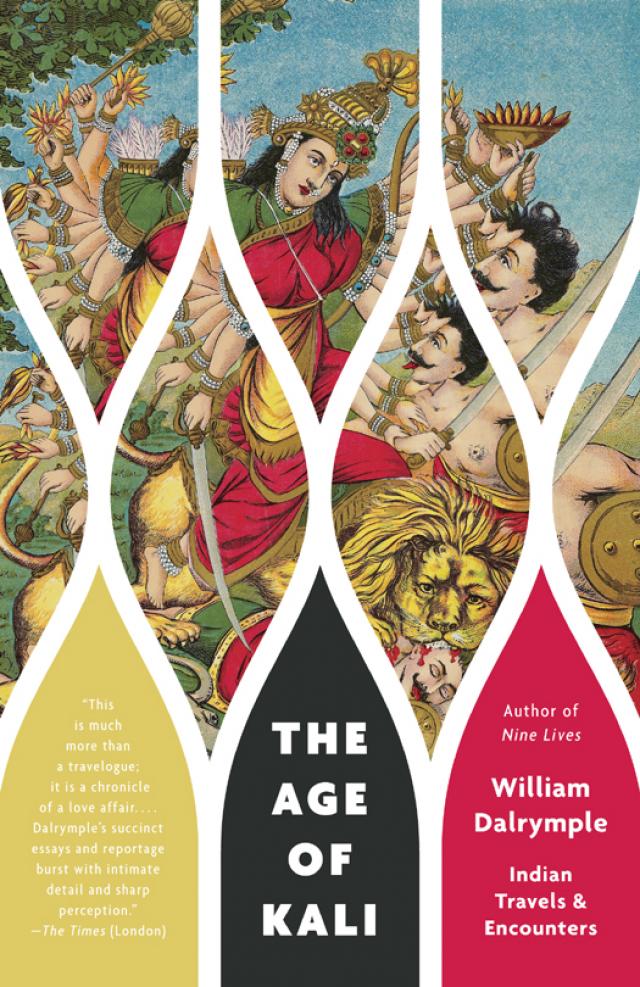
The Age of Kali

The Age of Kali

William Dalrymple

William Dalrymple

From the author of The Last Mughal and Nine Lives: the classic stories he gathered during the ten years he spent journeying across the Indian subcontinent, from Sri Lanka and southern India to the North West Frontier of Pakistan. As he searched for evidence of Kali Yug, the "age of darkness" predicted by an ancient Hindu cosmology in a final epoch of strife and corruption, Dalrymple encountered a region that thrilled and surprised him. Venturing to places rarely visited by foreigners, he presents compelling portraits of a diverse range of figures--from a Hindi rap megastar through the Tamil Tigers to the drug lords of Pakistan. Dalrymple's love for the subcontinent comes across in every page, which makes its chronicles of political corruption, ethnic violence and social disintegration all the more poignant. The result is a dark yet vibrant travelogue, and a unique look at a region that continues to be marked by rapid change and unlimited possibilities as it...
Read online
  • 55
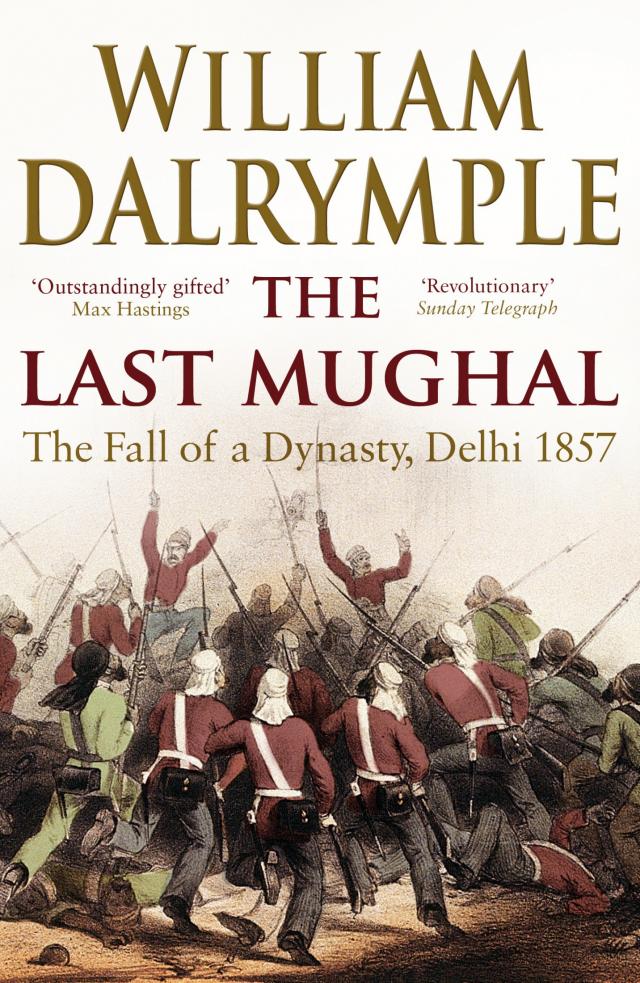
The Last Mughal

The Last Mughal

William Dalrymple

William Dalrymple

On a dark evening in November 1862, a cheap coffin is buried in eerie silence. There are no lamentations or panegyrics, for the British Commissioner in charge has insisted, 'No vesting will remain to distinguish where the last of the Great Mughals rests.' This Mughal is Bahadur Shah Zafar II, one of the most tolerant and likeable of his remarkable dynasty who found himself leader of a violent and doomed uprising. The Siege of Delhi was the Raj's Stalingrad, the end of both Mughal power and a remarkable culture.
Read online
  • 54
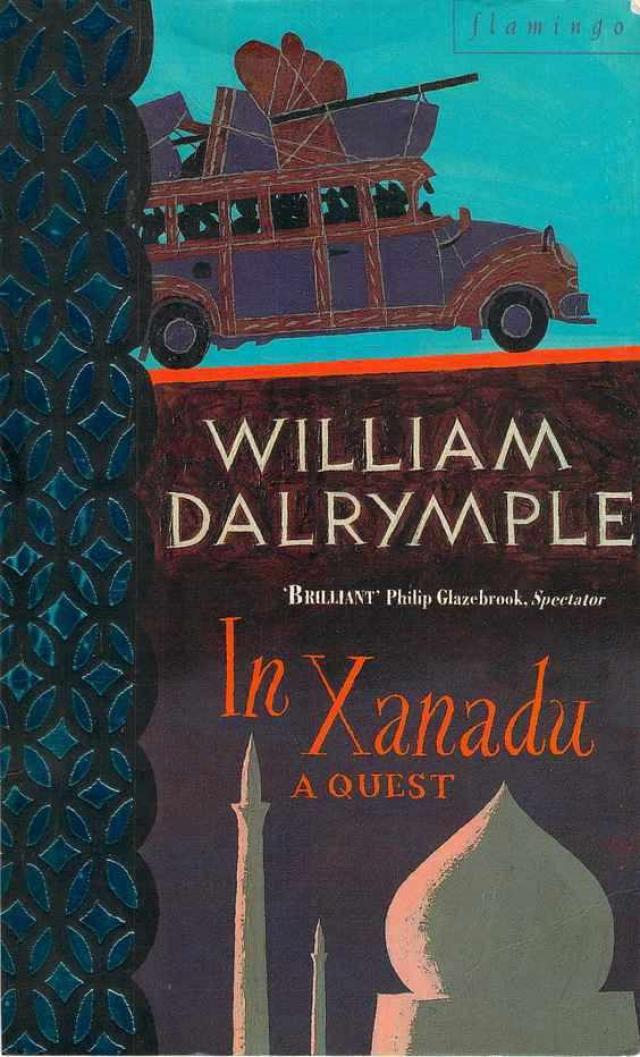
In Xanadu

In Xanadu

William Dalrymple

William Dalrymple

SUMMARY:Waiting for his exam results to come through, William Dalrymple decides to fill in his summer break by travelling. But the trip he plans is no light-hearted student jaunt - he decides to retrace the epic journey of Marco Polo from Jerusalem to Xanadu, the ruins of the palace of Kubla Khan, north of Peking. Intelligent and funny, In Xanadu is travel writing at its best.
Read online
  • 24
Nine Lives

Nine Lives

William Dalrymple

William Dalrymple

From the author of The Last Mughal ("A compulsively readable masterpiece" --The New York Review of Books), an exquisite, mesmerizing book that illuminates the remarkable ways in which traditional forms of religious life in India have been transformed in the vortex of the region's rapid change--a book that distills the author's twenty-five years of travel in India, taking us deep into ways of life that we might otherwise never have known exist.A Buddhist monk takes up arms to resist the Chinese invasion of Tibet--and spends the rest of his life atoning for the violence by hand printing the finest prayer flags in India . . . A Jain nun tests her powers of detachment as she watches her closest friend ritually starve herself to death . . . A woman leaves her middle-class life in Calcutta and finds unexpected fulfillment living as a Tantric in an isolated, skull-filled cremation ground . . . A prison warder from Kerala is worshipped as an incarnate deity for...
Read online
  • 16
Koh-i-Noor

Koh-i-Noor

William Dalrymple

William Dalrymple

The first comprehensive and authoritative history of the Koh-i-Noor, arguably the most celebrated and mythologised jewel in the world. On 29 March 1849, the ten-year-old Maharajah of the Punjab was ushered into the magnificent Mirrored Hall at the centre of the great Fort in Lahore. There, in a public ceremony, the frightened but dignified child handed over great swathes of the richest country in India in a formal Act of Submission to a private corporation, the East India Compan. He was also compelled to hand over to the British monarch, Queen Victoria, perhaps the single most valuable object on the subcontinent: the celebrated Koh-i Noor diamond. The Mountain of Light. The history of the Koh-i-Noor that was then commissioned by the British may have been one woven together from gossip of Delhi bazaars, but it was to be become the accepted version. Only now is it finally challenged, freeing the diamond from the fog of mythology that has clung to it for so...
Read online
  • 13
From The Holy Mountain

From The Holy Mountain

William Dalrymple

William Dalrymple

SUMMARY:In his third book William Dalrymple has dug deep to present the case of the Middle East s downtrodden Christians. More hard-hitting than either of his previous books, From the Holy Mountain is driven by indignation. While leavened with his characteristic jauntiness and humour, it is also profoundly shocking. Time and time again in the details of Dalrymple s discoveries I found myself asking: why do we not know this? The sense of unsung tragedy accumulates throughout the chapters of this book&From the Holy Mountain is the most rewarding sort of travel book, combining flashes of lightly-worn scholarship with a powerful sense of place and the immediacy of the best journalism. But more than that it is a passionate cri de coeur for a forgotten people which few readers will be able to resist Philip Marsden, Spectator
Read online
  • 8
183