American Fascists

American Fascists

Chris Hedges

Chris Hedges

Twenty-five years ago, when Pat Robertson and other radio and televangelists first spoke of the United States becoming a Christian nation that would build a global Christian empire, it was hard to take such hyperbolic rhetoric seriously. Today, such language no longer sounds like hyperbole but poses, instead, a very real threat to our freedom and our way of life. In American Fascists, Chris Hedges, veteran journalist and author of the National Book Award finalist War Is a Force That Gives Us Meaning, challenges the Christian Right's religious legitimacy and argues that at its core it is a mass movement fueled by unbridled nationalism and a hatred for the open society. Hedges, who grew up in rural parishes in upstate New York where his father was a Presbyterian pastor, attacks the movement as someone steeped in the Bible and Christian tradition. He points to the hundreds of senators and members of Congress who have earned between 80 and 100 percent approval ratings...
Read online
  • 242
War is a Force That Gives Us Meaning

War is a Force That Gives Us Meaning

Chris Hedges

Chris Hedges

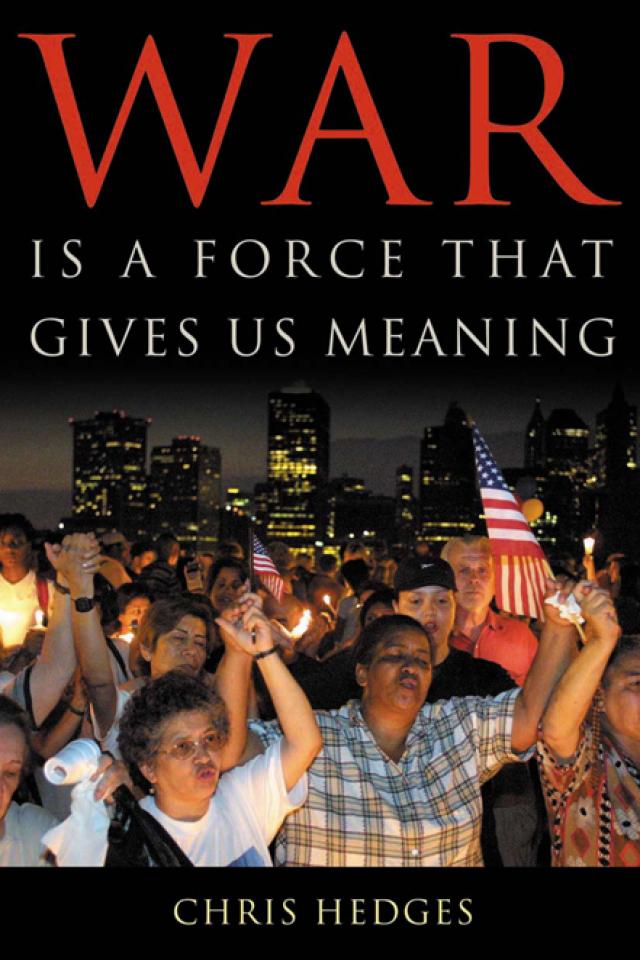
As a veteran war correspondent, Chris Hedges has survived ambushes in Central America, imprisonment in Sudan, and a beating by Saudi military police. He has seen children murdered for sport in Gaza and petty thugs elevated into war heroes in the Balkans. Hedges, who is also a former divinity student, has seen war at its worst and knows too well that to those who pass through it, war can be exhilarating and even addictive: "It gives us purpose, meaning, a reason for living." awing on his own experience and on the literature of combat from Homer to Michael Herr, Hedges shows how war seduces not just those on the front lines but entire societies, corrupting politics, destroying culture, and perverting the most basic human desires. Mixing hard-nosed realism with profound moral and philosophical insight, War Is a Force That Gives Us Meaning is a work of terrible power and redemptive clarity whose truths have never been more necessary.
Read online
  • 50
Wages of Rebellion

Wages of Rebellion

Chris Hedges

Chris Hedges

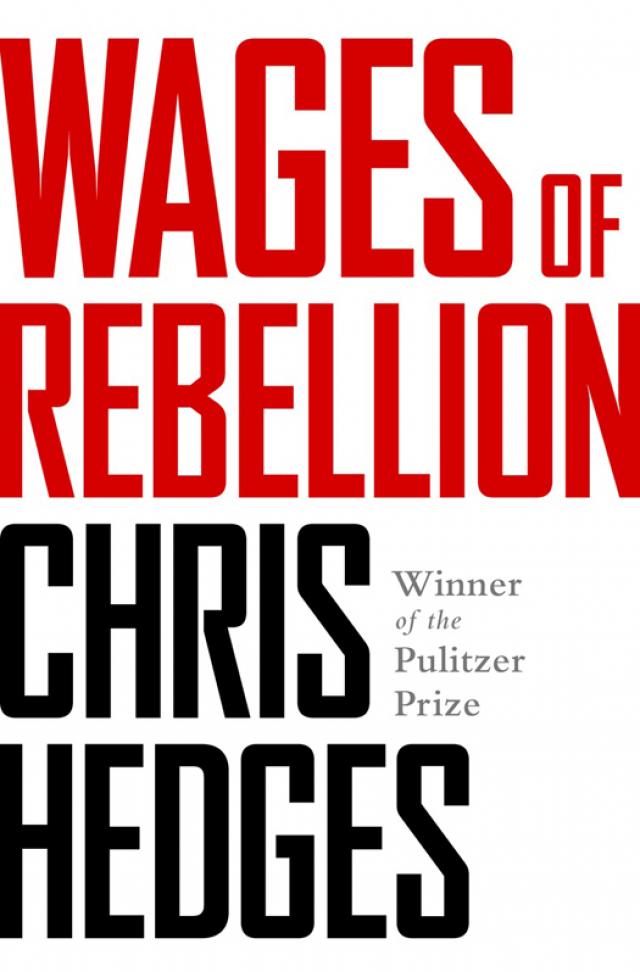
#1 NATIONAL BESTSELLERFor bestseller and Pulitzer Prize winner Chris Hedges, we are once again riding the crest of a revolutionary epic, much like 1848 or 1917, from the Arab Spring to movements against austerity in Greece to the Occupy movement. From the vantage point of a world on the edge, Wages of Rebellion investigates what social and psychological factors cause revolution, rebellion and resistance. Drawing on an ambitious overview of prominent philosophers, historians and literary figures, Chris Hedges shows not only the harbingers of a coming crisis but also the nascent seeds of rebellion. His message is clear: popular uprisings across the globe are inevitable in the face of environmental destruction and wealth polarization. Focusing on the stories of rebels from around the world and throughout history, Hedges investigates what it takes to be a rebel in modern times. Utilizing the work of Reinhold Niebuhr, he describes the...
Read online
  • 45
Empire of Illusion

Empire of Illusion

Chris Hedges

Chris Hedges

Pulitzer prize–winner Chris Hedges charts the dramatic and disturbing rise of a post-literate society that craves fantasy, ecstasy and illusion. Chris Hedges argues that we now live in two societies: One, the minority, functions in a print-based, literate world, that can cope with complexity and can separate illusion from truth. The other, a growing majority, is retreating from a reality-based world into one of false certainty and magic. In this "other society," serious film and theatre, as well as newspapers and books, are being pushed to the margins. In the tradition of Christopher Lasch's The Culture of Narcissism and Neil Postman's Amusing Ourselves to Death, Hedges navigates this culture — attending WWF contests as well as Ivy League graduation ceremonies — exposing an age of terrifying decline and heightened self-delusion. --This text refers to an out of print or unavailable edition of this title
Read online
  • 39
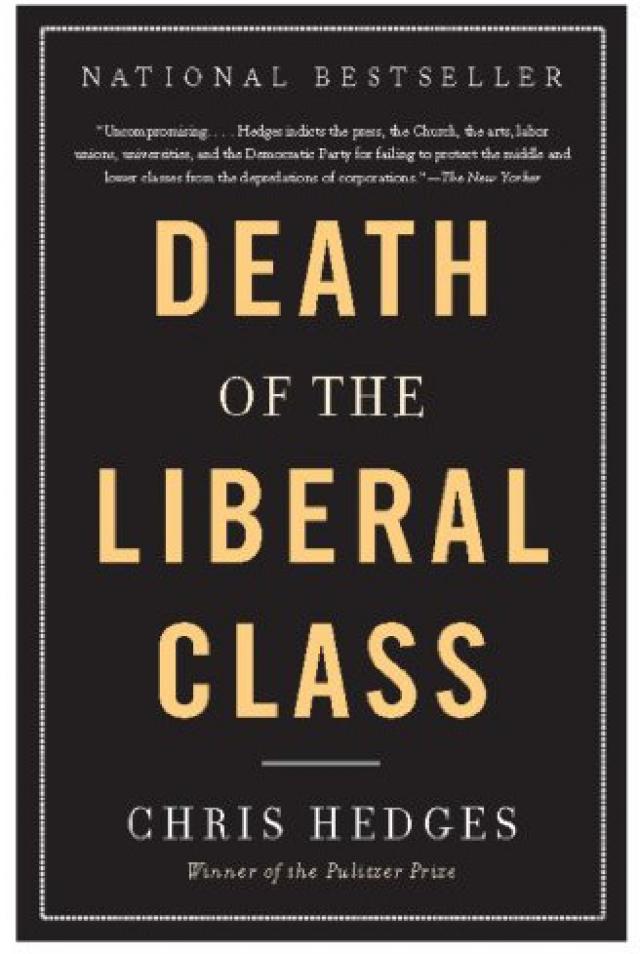
Death of the Liberal Class

Death of the Liberal Class

Chris Hedges

Chris Hedges

The liberal class plays a vital role in a democracy. It gives moral legitimacy to the state. It makes limited forms of dissent and incremental change possible. The liberal class posits itself as the conscience of the nation. It permits us, through its appeal to public virtues and the public good, to define ourselves as a good and noble people. Most importantly, on behalf of the power elite the liberal class serves as bulwarks against radical movements by offering a safety valve for popular frustrations and discontentment by discrediting those who talk of profound structural change. Once this class loses its social and political role then the delicate fabric of a democracy breaks down and the liberal class, along with the values it espouses, becomes an object of ridicule and hatred. The door that has been opened to proto-fascists has been opened by a bankrupt liberalismThe Death of the Liberal Class examines the failure of the liberal class to confront the rise of the corporate state and the consequences of a liberalism that has become profoundly bankrupted. Hedges argues there are five pillars of the liberal establishment – the press, liberal religious institutions, labor unions, universities and the Democratic Party— and that each of these institutions, more concerned with status and privilege than justice and progress, sold out the constituents they represented. In doing so, the liberal class has become irrelevant to society at large and ultimately the corporate power elite they once served.From Publishers WeeklyStarred Review. In this tsunami of terrifying revelations, juxtaposed truths, and demonstrated facts, Hedges (War is a Force That Gives Us Meaning) argues that the traditional beacons of the liberal class—the universities, media, church, labor unions, and arts–have sacrificed themselves completely to the dominance of corporate greed and unbounded capitalism. We are all to blame and everything moral about our democracy stands to be lost—is indeed already vanishing, in Hedges's view—and those who draw attention to it are banished and booed. While every page erupts with calamities of the human spirit worthy of their own irate broadcasts and bull-horned fury, Hedges is at his best when he unpacks the density of his polemic and embraces the power of his narrative. Regardless of form, however, his most interesting theses include the parallel between the current domestic climate and the fall of Weimar Germany and the conclusion that "Everything formed by violence is senseless and useless. It exists without a future. It leaves behind nothing but death, grief, and destruction." These insights come not just as warning, but as witness. (Nov.) (c) Copyright PWxyz, LLC. All rights reserved. From BooklistThe real danger to progressive social ideals is not President Obama’s failure to push through a more liberal agenda or the threat presented by the Tea Party and others pushing the Republicans more to the Right. Hedges argues that the true threat to liberalism is the long and gradual weakening of its ideals. Drawing on analysis and interviews from his long career as a journalist, including 15 years with the New York Times, Hedges chronicles the corruption of such bastions of liberalism as the Democratic Party, academia, and labor unions. He cites the NAFTA agreement and welfare reform during the Clinton administration and union coziness with corporations as recent examples of the merging of government and corporate interests to the detriment of the interests of the poor or even the middle class. He also reviews the long history of assassination and co-optation of radical voices in the U.S. and the singular career of Ralph Nader as a consistent voice against capitalist excess. This is a thoughtful analysis of why and how liberals have compromised principles due to the allure of power and wealth. --Vanessa Bush
Read online
  • 32
155